
IKEA and its Tiny Houses reveal how we adapt to small spaces
Suivez Planète Déco sur Google — ajoutez-nous à vos favoris pour retrouver nos articles déco dans votre fil d'actualitésIKEA unveils its Tiny Houses and a global report on organization, clutter, and the memories we keep in small spaces
Over the past few days, IKEA has set up miniature houses on the streets of Melbourne, Australia, and in Chengdu and Beijing, China. Each model reproduces an interior on a 1:12 scale. Inside, you can see stacks of books, half-open drawers, and objects scattered on the shelves. The Swedish retailer has partnered on this project with Stockholm-based Swedish artist Christopher Robin Nordström.
Called “Tiny Houses,” the installation poses a simple question: How do our interiors retain their character when space is limited? Today’s homes must serve multiple functions at once. They must serve as living spaces, but also as offices, and sometimes even as workshops. They allow us to cook, eat, and rest, all within a single space. This pressure on space creates very real friction in the daily lives of millions of households around the world.
This art project illustrates the findings of the IKEA Store and Organize 2026 report. The survey polled more than 30,000 people across 31 different markets. It reveals a profound shift in our relationship with home. Today, 59% of respondents prefer an interior with character to one that’s perfectly tidy. This figure marks a clear break from the years of minimalist design that have dominated social media.
The households surveyed are no longer looking for a magazine-perfect home, stiff and impersonal. They want rooms that tell a story, their own story. This cultural shift is also changing the way brands think about furniture and storage. For IKEA, it’s no longer about hiding everyday objects. It’s about finding a place for them. Small adjustments to a room’s layout are often enough to gain usable space, without the need for major renovations.
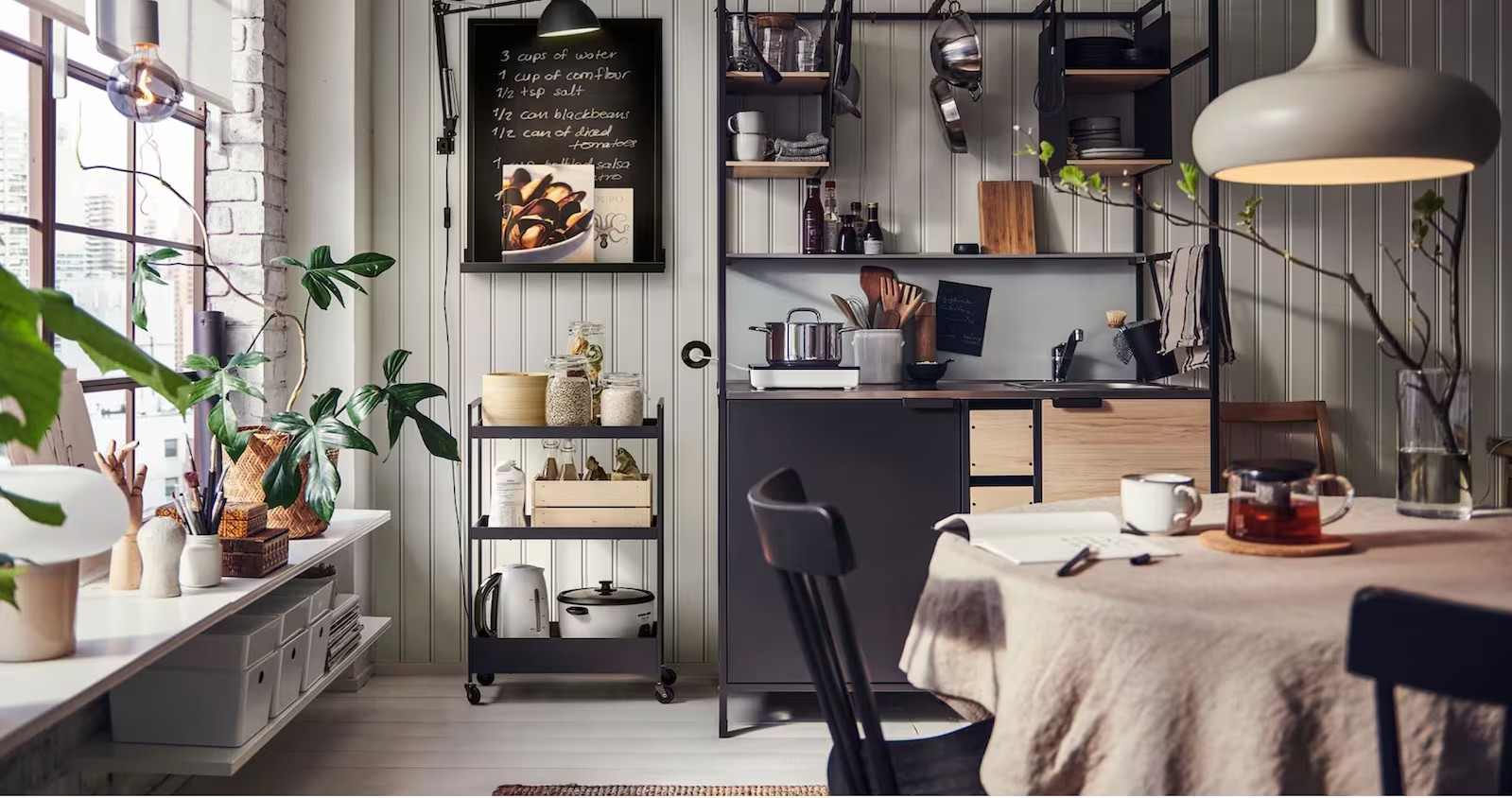
The miniature installations mark the launch of IKEA Open House, a global initiative focused on modular storage. Each house features the brand’s iconic furniture on a smaller scale. You can recognize the Billy bookcase and the Sektion kitchen, nestled within a highly detailed home setting. These miniature objects aren’t merely decorative accessories, they demonstrate how well-thought-out storage supports a family’s real daily life.
The report highlights another striking statistic on this topic: no less than 82% of those surveyed keep items solely for their sentimental value. These items sometimes lie forgotten at the back of a closet. Licca Li, head of retail space design at Ingka Group, aptly sums up this trend. “People are no longer looking for the perfect home,” she says, “they want a home that reflects who they are and preserves their memories.” What we keep in our homes speaks volumes about our personal history.
This miniature project resonates far beyond the world of urban art. It addresses a central issue in contemporary interior design: the shrinking living spaces found throughout major cities. Whether in studio apartments, compact family apartments, or houses, we’re all looking for the same thing. We want to create a truly comfortable living environment without sacrificing the personality of the space. Mobile tiny houses and mini-homes have already led the way in recent years.
They demonstrate that a small space can incorporate just as much clever design as a large home. Nordström takes this idea even further with his detailed models. He demonstrates that the true luxury of an interior lies in its adaptability, not its size. This perspective changes the way we view storage in general, transforming it into an ally in everyday life. For households living in limited spaces, this approach offers concrete and accessible solutions.
The report paints a detailed picture of our storage habits, which can sometimes be surprising. Many households effectively live in two distinct homes: the everyday interior, which is a bit cluttered, and the presentable version shown to guests. The kitchen countertop often concentrates the most visible clutter, while closed-off nooks discreetly absorb the overflow of accumulated items.
Worldwide, 68% of households have a drawer dedicated to misplaced items, cables, and keys they can’t find. The lack of space also leads to more unexpected solutions. In 10% of households, the oven serves as extra storage. This proportion rises to 21% in South Korea. These small everyday workarounds reflect a creative adaptation to homes that have become smaller. They also show that ideal storage remains a matter of practicality, a far cry from the overly polished images in traditional home decor catalogs.
These space-related compromises directly touch our emotions. Nearly one in five people keeps a gift they don't like. In doing so, they avoid hurting the person who gave it to them. At the same time, 26% of respondents hide mementos from past romantic relationships. This habit is 6% more common among men than among women. The report doesn’t really seek to explain this discrepancy.
These figures reveal an intimate reality that is often kept silent. Our homes harbor layers of memory that we never display. Nor can we bring ourselves to get rid of them. Material clutter thus becomes a silent language, that of our past and present attachments. Nordström captures this idea very accurately in his models. Each miniature object seems to have a specific reason for being there, even if it appears insignificant at first glance.
Clutter also has very concrete consequences for our social relationships. Worldwide, 10% of people have canceled an invitation from friends because their home was deemed too messy. One-third of respondents, 34%, move their belongings from one room to another just before guests arrive. The time wasted looking for a misplaced item varies greatly by country. It averages 15 minutes per day in the United Kingdom, compared to 80 minutes in India. Yet clutter is not always seen as a problem to be solved.
On the contrary, about 15% of respondents see it as a source of creativity. This proportion rises to 31% in China, while it drops to just 4% in Japan. These cultural differences remind us that there is no single “right” way to live at home. Perfect organization, often presented as a universal ideal, actually masks very different habits across different regions of the world.
Christopher Robin Nordström’s miniature houses offer a thoughtful interpretation of these figures. They remind us that good organization should never force artificial perfection. Rather, it should offer enough flexibility to live with the things we love to keep close to us. From late August through September, the IKEA Open House initiative continues at participating stores.
Visitors will discover modular storage configurations and practical solutions for organizing their homes. The stated goal is very clear: to make the home calmer, more functional, and, above all, better suited to each person’s actual habits. This approach shifts the conversation about storage in interior design. It invites us to think of organizing a space as a tool that serves our daily lives. It moves away from an aesthetic constraint imposed from the outside.
Above all, there’s a simple lesson to be learned from this IKEA project: A successful interior is never judged by its perfect tidiness. It’s judged by its ability to accommodate an entire life—stacked books, musical instruments, and travel souvenirs. A well-designed home doesn’t need to be flawless to be successful.


Called “Tiny Houses,” the installation poses a simple question: How do our interiors retain their character when space is limited? Today’s homes must serve multiple functions at once. They must serve as living spaces, but also as offices, and sometimes even as workshops. They allow us to cook, eat, and rest, all within a single space. This pressure on space creates very real friction in the daily lives of millions of households around the world.
Chosen clutter over perfection
This art project illustrates the findings of the IKEA Store and Organize 2026 report. The survey polled more than 30,000 people across 31 different markets. It reveals a profound shift in our relationship with home. Today, 59% of respondents prefer an interior with character to one that’s perfectly tidy. This figure marks a clear break from the years of minimalist design that have dominated social media.
The households surveyed are no longer looking for a magazine-perfect home, stiff and impersonal. They want rooms that tell a story, their own story. This cultural shift is also changing the way brands think about furniture and storage. For IKEA, it’s no longer about hiding everyday objects. It’s about finding a place for them. Small adjustments to a room’s layout are often enough to gain usable space, without the need for major renovations.
Scale models that depict real family life
The miniature installations mark the launch of IKEA Open House, a global initiative focused on modular storage. Each house features the brand’s iconic furniture on a smaller scale. You can recognize the Billy bookcase and the Sektion kitchen, nestled within a highly detailed home setting. These miniature objects aren’t merely decorative accessories, they demonstrate how well-thought-out storage supports a family’s real daily life.
The report highlights another striking statistic on this topic: no less than 82% of those surveyed keep items solely for their sentimental value. These items sometimes lie forgotten at the back of a closet. Licca Li, head of retail space design at Ingka Group, aptly sums up this trend. “People are no longer looking for the perfect home,” she says, “they want a home that reflects who they are and preserves their memories.” What we keep in our homes speaks volumes about our personal history.
A concept that resonates with small spaces
This miniature project resonates far beyond the world of urban art. It addresses a central issue in contemporary interior design: the shrinking living spaces found throughout major cities. Whether in studio apartments, compact family apartments, or houses, we’re all looking for the same thing. We want to create a truly comfortable living environment without sacrificing the personality of the space. Mobile tiny houses and mini-homes have already led the way in recent years.
They demonstrate that a small space can incorporate just as much clever design as a large home. Nordström takes this idea even further with his detailed models. He demonstrates that the true luxury of an interior lies in its adaptability, not its size. This perspective changes the way we view storage in general, transforming it into an ally in everyday life. For households living in limited spaces, this approach offers concrete and accessible solutions.
The “catch-all” drawer, a universal habit
The report paints a detailed picture of our storage habits, which can sometimes be surprising. Many households effectively live in two distinct homes: the everyday interior, which is a bit cluttered, and the presentable version shown to guests. The kitchen countertop often concentrates the most visible clutter, while closed-off nooks discreetly absorb the overflow of accumulated items.
Worldwide, 68% of households have a drawer dedicated to misplaced items, cables, and keys they can’t find. The lack of space also leads to more unexpected solutions. In 10% of households, the oven serves as extra storage. This proportion rises to 21% in South Korea. These small everyday workarounds reflect a creative adaptation to homes that have become smaller. They also show that ideal storage remains a matter of practicality, a far cry from the overly polished images in traditional home decor catalogs.
Items we don't dare throw away
These space-related compromises directly touch our emotions. Nearly one in five people keeps a gift they don't like. In doing so, they avoid hurting the person who gave it to them. At the same time, 26% of respondents hide mementos from past romantic relationships. This habit is 6% more common among men than among women. The report doesn’t really seek to explain this discrepancy.
These figures reveal an intimate reality that is often kept silent. Our homes harbor layers of memory that we never display. Nor can we bring ourselves to get rid of them. Material clutter thus becomes a silent language, that of our past and present attachments. Nordström captures this idea very accurately in his models. Each miniature object seems to have a specific reason for being there, even if it appears insignificant at first glance.
When clutter becomes a social issue
Clutter also has very concrete consequences for our social relationships. Worldwide, 10% of people have canceled an invitation from friends because their home was deemed too messy. One-third of respondents, 34%, move their belongings from one room to another just before guests arrive. The time wasted looking for a misplaced item varies greatly by country. It averages 15 minutes per day in the United Kingdom, compared to 80 minutes in India. Yet clutter is not always seen as a problem to be solved.
On the contrary, about 15% of respondents see it as a source of creativity. This proportion rises to 31% in China, while it drops to just 4% in Japan. These cultural differences remind us that there is no single “right” way to live at home. Perfect organization, often presented as a universal ideal, actually masks very different habits across different regions of the world.
An event to discover in-store
Christopher Robin Nordström’s miniature houses offer a thoughtful interpretation of these figures. They remind us that good organization should never force artificial perfection. Rather, it should offer enough flexibility to live with the things we love to keep close to us. From late August through September, the IKEA Open House initiative continues at participating stores.
Visitors will discover modular storage configurations and practical solutions for organizing their homes. The stated goal is very clear: to make the home calmer, more functional, and, above all, better suited to each person’s actual habits. This approach shifts the conversation about storage in interior design. It invites us to think of organizing a space as a tool that serves our daily lives. It moves away from an aesthetic constraint imposed from the outside.
Above all, there’s a simple lesson to be learned from this IKEA project: A successful interior is never judged by its perfect tidiness. It’s judged by its ability to accommodate an entire life—stacked books, musical instruments, and travel souvenirs. A well-designed home doesn’t need to be flawless to be successful.



Commentaires